Surf
The break is right outside.
Surfing at Cape Erimo
Cold water, empty waves, at the edge of north Japan.
Cape Erimo is the southern tip of the Hidaka mountains, where Hokkaido runs out into the Pacific. It is the windiest cape in Japan, and one of the least-visited stretches of coast in the country. For surfers, that means open exposure to Pacific swell and lineups that are almost always empty.
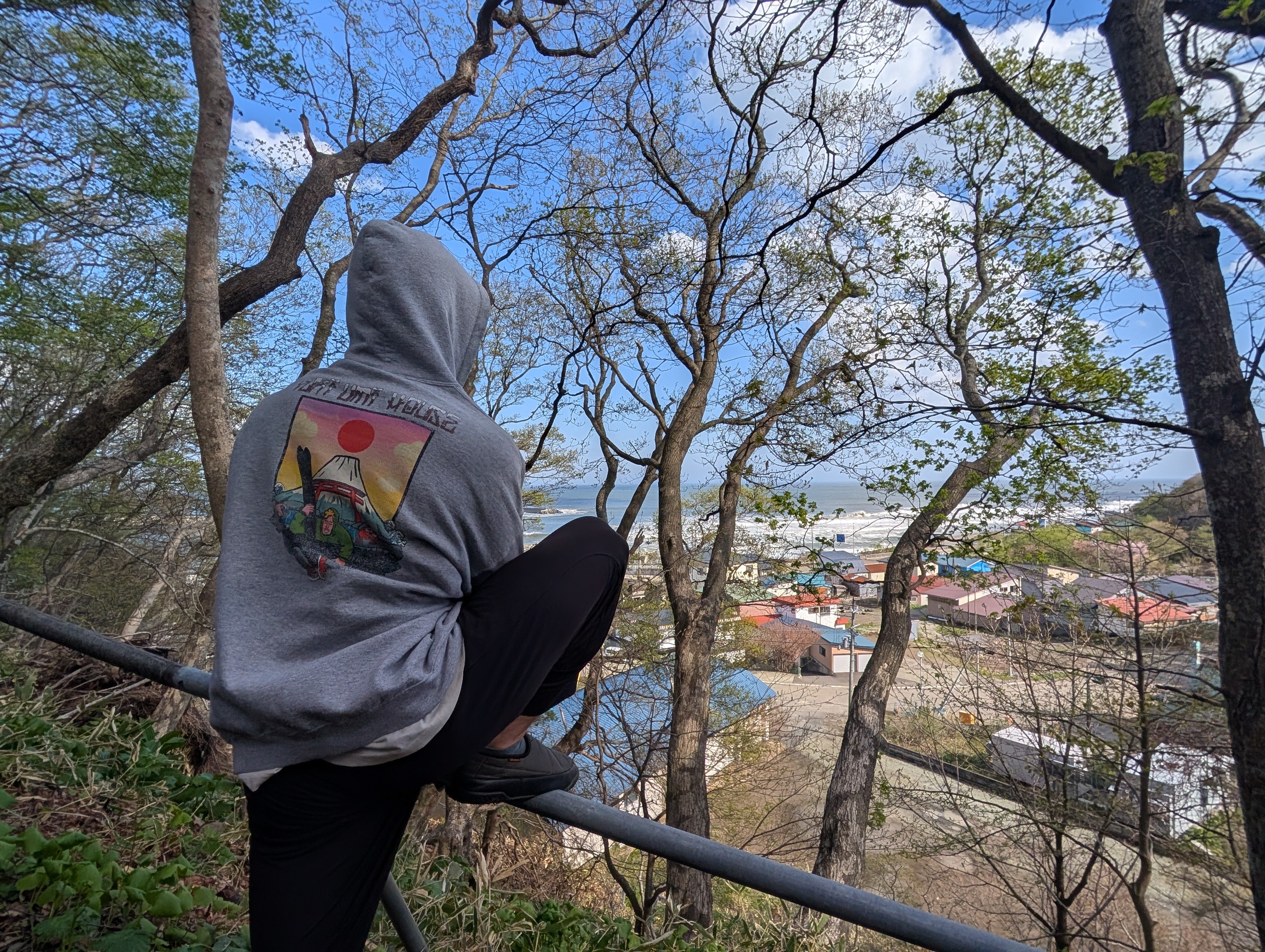
EZO POINT sits directly above the break. Check the waves from the living room window, then walk down the beach. When the wind or swell is wrong at the house, we drive the coast to find a spot that works — there is a lot of coastline here, and very few people surfing it.
Cape Erimo works on almost any swell. Depending on the direction — south, south-east, south-west or east — there is a spot somewhere along the Hiroo, Erimo and Samani coast that lines up, from beach breaks to reefs and cobblestone points. We don't publish spot names; your guide takes you to whichever is best on the day, and can tell you exactly how each one handles the tide.
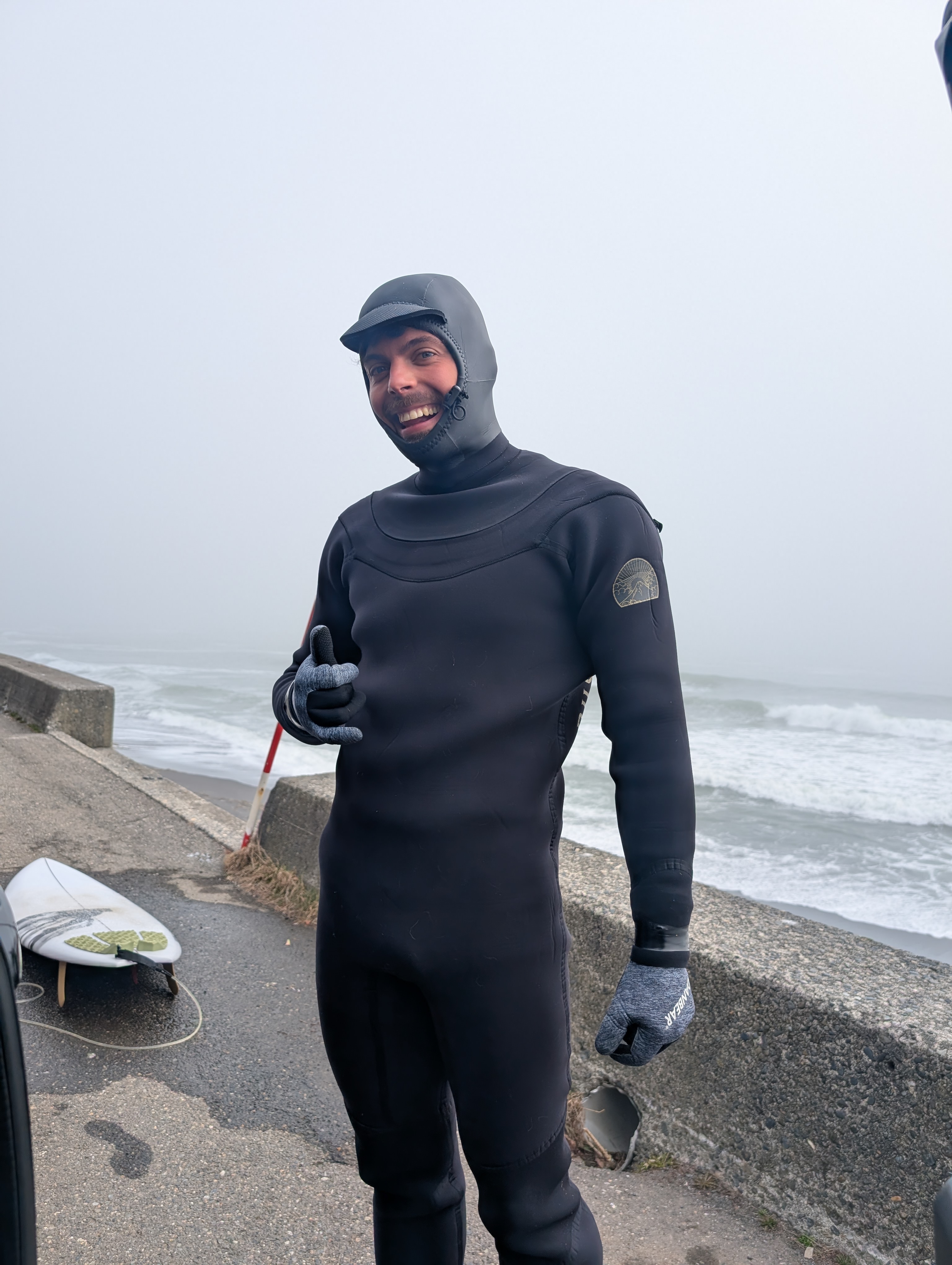
The water runs from 20–25°C in summer to below 15°C in winter, so you will need proper rubber outside the warmest months — we rent wetsuits and dry suits, hoods, gloves and boots so you can travel light. New to Hokkaido? Read our Hokkaido surf guide.
- Where
- Cape Erimo, on the Pacific coast of Hokkaido, north Japan
- Season
- Late spring through autumn — best swells August to November
- Water
- Summer 20–25°C · spring & autumn 15–20°C · winter below 15°C
- Wetsuit
- 3/2 in summer, 4/3 in spring and autumn, 5/4 hooded with boots in winter
- Swell
- South, south-east, south-west or east — something works on almost every swell
- Breaks
- Beach breaks, reefs and cobblestone points, spread along the Hiroo, Erimo and Samani coast
- Crowds
- Usually just a handful of locals — often nobody
- Getting here
- About 3 hours by car from New Chitose Airport (CTS)
Seasons
When to surf Erimo.
Spring
Apr–Jun
The water is still cool after winter, around 15–20°C. Fewer swells and sea fog on calm mornings, but the first clean days of the year are completely empty. A 4/3 with boots early in the season.
Summer
Jul–Aug
The warmest water of the year and the friendliest time for beginners. Small, playful days, with the first typhoon swells arriving from the south in late summer.
Autumn
Sep–Nov
Prime time. Typhoon and Pacific groundswells line up with lighter winds, and the water holds its summer warmth into September. The best season to plan a surf trip around.
Winter
Dec–Mar
Snow on the beach and water below 15°C. We do not run guided surf in winter, but the cape is spectacular — come for the quiet, the seals and the wind.
Wetsuit guide for cold water
- Below 10°C
- 5/4 or 6/5 hooded, boots and gloves — or a dry suit
- 10–15°C
- 5/4 or 4/3 with boots
- 15–20°C
- 4/3 or 3/2 full suit
- 20–25°C
- 3/2 full suit, or a spring suit on the warmest days
Surf Guide
Full day · 2 surf sessions
¥15000 / person
What's included
- ·Guide for the full day
- ·2 surf sessions (morning + afternoon or as conditions allow)
- ·Spot selection based on swell, wind, and your level
- ·Post-surf debrief
We surf from late spring through autumn.
Water temperature: 20–25°C in summer, 15–20°C in spring and autumn, below 15°C in winter.
Wetsuit is essential — rental available.
Gear Rental
Wetsuit / Dry suit
Men's & women's sizes
¥6000 / day / person
Essential for Hokkaido waters. We carry a full range of thicknesses.
Surfboard / Bodyboard
Shortboard, midlength, longboard options
¥5000–8,000 / day / person
Tell us your height, weight, and level when you book. We'll match you to the right shape.
Other accessories
Fins, leashes, wax, hood, gloves, booties
Price on request
Just ask.
Level Guide
Non-surfer
You don't surf — that's fine. Erimo has plenty else.
See Adventures →Beginner
You want to learn. We can point you to the right break and give you the basics. Gear rental recommended.
Intermediate
You can take off on your own. We'll guide you to the best spot for your level on the day.
Advanced
You're chasing spots. We'll take you to the ones that don't show up on any app.
Surf FAQ
What swell works at Cape Erimo?
Almost all of them. Depending on whether the swell comes from the south, south-east, south-west or east, a different spot along the Hiroo, Erimo and Samani coast lines up — so there is usually somewhere to surf when there is swell.
What kind of breaks are there?
A mix of beach breaks, reefs and cobblestone points, each reacting differently to the tide. We do not publish spot names; your guide chooses the best one for the conditions and your level on the day.
Can you surf in Hokkaido?
Yes. Hokkaido is Japan's northernmost main island and has hundreds of kilometres of surfable coastline. The Pacific coast, where Cape Erimo sits, picks up the most consistent swell, including typhoon swells from late summer into autumn.
When is the best time to surf at Cape Erimo?
August to November is the most reliable window, when typhoon and Pacific groundswells combine with warmer water. We guide from late spring through autumn.
How cold is the water?
Around 20–25°C in summer, 15–20°C in spring and autumn, and below 15°C in winter. A wetsuit is essential all year.
What wetsuit do I need for cold water surfing in Japan?
A 3/2 in summer, a 4/3 in spring and autumn, and a 5/4 hooded wetsuit with boots in winter (add gloves if the water drops below 10°C). We rent wetsuits and dry suits in a full range of thicknesses, so you do not need to bring your own.
Is the surf crowded?
Rarely. Unlike Shonan or Chiba near Tokyo, the Hokkaido coast is long and sparsely populated, and few people surf it. On most days you share the lineup with a few locals, or no one at all.
Can beginners surf at Cape Erimo?
Yes. Summer brings the smallest, friendliest waves, and our guide picks a spot that matches your level on the day. Rent a wetsuit and a longboard or midlength, and we will cover the basics.
How do I get to Cape Erimo?
Fly into New Chitose Airport (CTS) and drive about 3 hours, or fly into Obihiro (OBO), about 2 hours away. A rental car is the easiest way to explore the coast; we can arrange a pickup on request.
Guides